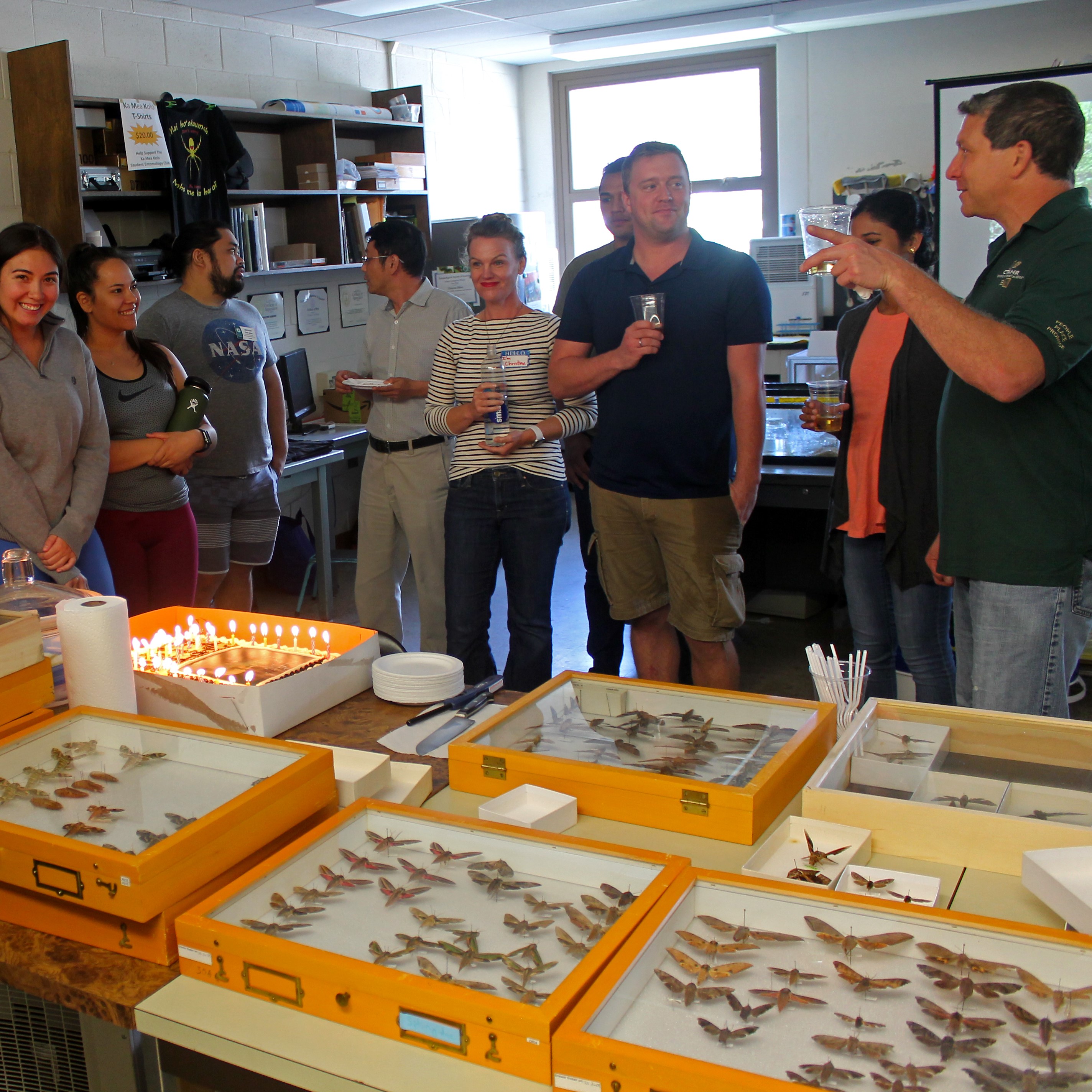
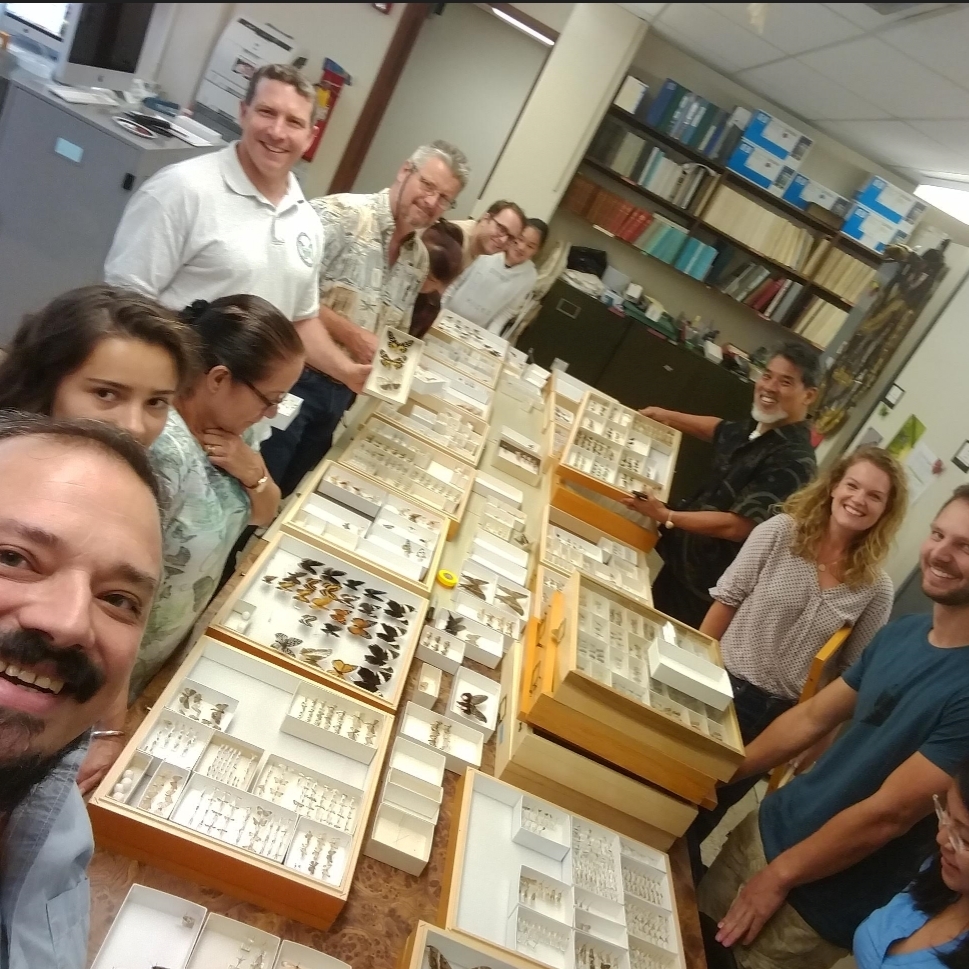
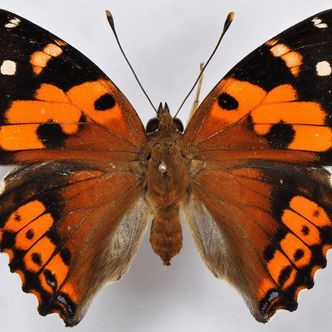
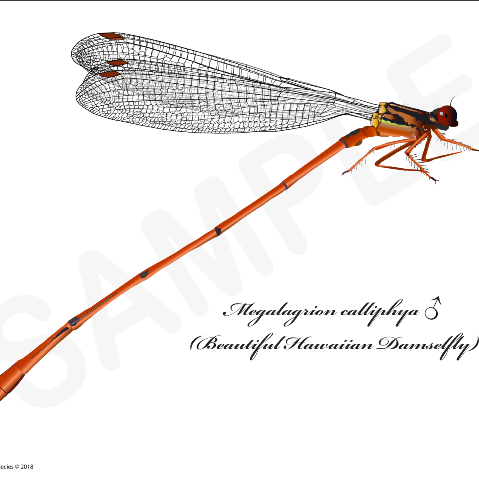
The University of Hawai'i Insect Museum serves as a center for insect identification and systematics-based research. We have workspace, equipment, and resources for detailed taxonomic analysis, and researchers from many different laboratories are able to work and interact under its auspices. Our close association with the extensive collections and staff of the Bishop Museum greatly enhances this interactive museum community.

The University of Hawaii Insect Museum is currently in the midst of digitizing the entire collection, which will result in a fully searchable database that includes images and can generate interactive maps. Some records can already be accessed at the Southwest Collections of Arthropods Network portal and at InvertNet. For an older database that may still be useful, search our Insect Holdings Database.
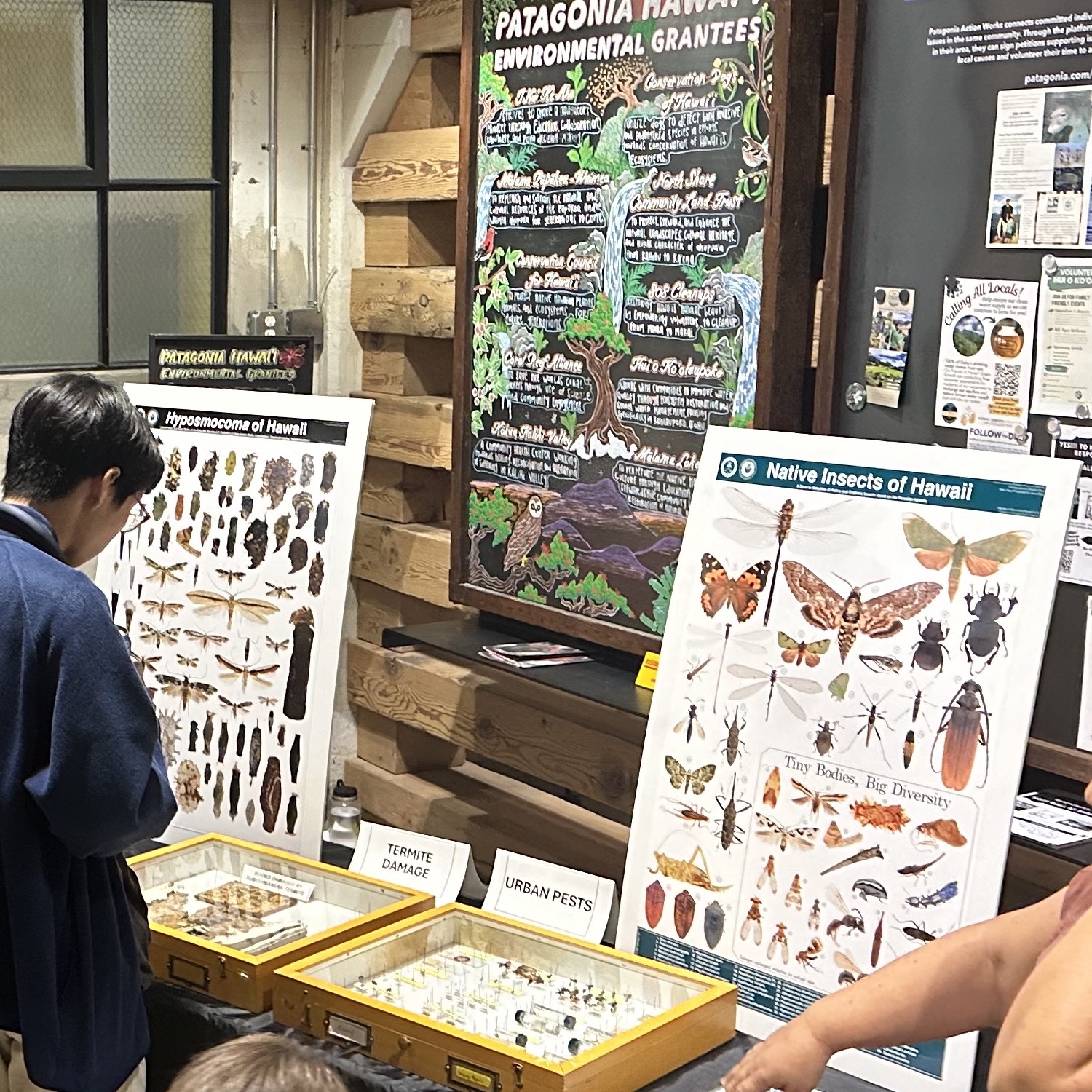
We house extensive native insect collections, including the Hawaiian Drosophila collection, which serve as historical records. Older collection records help establish patterns of decline and disappearance for different insect species, and may help to identify those factors which have led to the declines.
We house synoptic pest collections for most crops of agricultural importance including historical collections indicating the presence, absence and patterns of invasions for newly introduced insects. This part of the collection is invaluable for tracking the spread of new invasive insects and the effectiveness of control efforts for current and historical invasions.

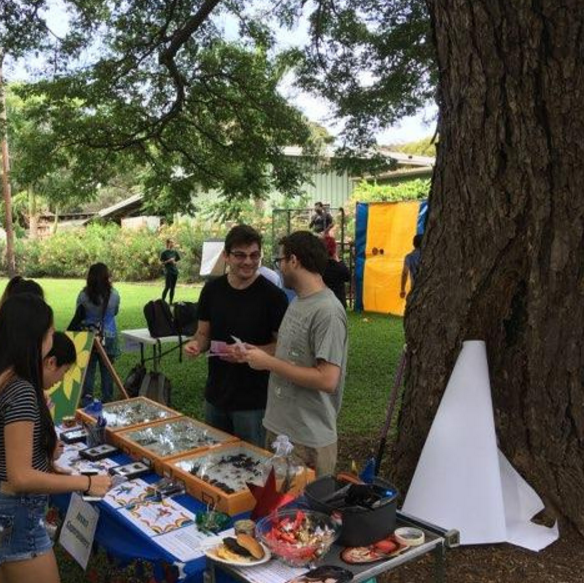
Support for the museum helps to preserve the collection, fund events, and support field work and research experience for students from high school to the PhD level. Please consider making a donation.
Donate
We are grateful for any donations made through the UH Foundation at this link. If you would like to be recognized for your donation, please email us at rubinoff@hawaii.edu, kaaustin@hawaii.edu, or slpote@hawaii.edu to let us know about your contribution, as the Foundation will not provide us with contact information for donors.
Digitization in the world of natural history collections means making the information on the specimens, such as photos and the identification and collecting information, available digitally and online. During a National Science Foundation (NSF) funded project that ran up to 2017, about 50% of the UHIM holdings were digitized. These records were uploaded to the Southwest Collections of Arthropod Network (SCAN), which added them to the Global Biodiversity Information Facility (GBIF). SCAN has been discontinued, but the 129,205 digitized UHIM specimens from this period remain available and searchable on GBIF: https://doi.org/10.15468/twdp03. However, hundreds of thousands of specimens have been added to the UHIM collections since 2017 and await further funding to be digitized. Feel free to contact us if you would like to inquire about our holdings of a specific group of interest.
The UHIM holds over 100 primary type specimens (this includes holotypes, lectotypes, syntypes, isosyntypes, neotypes, and isotypes). These are unique "name bearing specimens" that connect a Latin name to a species. Whenever new species are discovered, they need to be compared with the primary types of other species to ensure that they are truly new. The UHIM is one of two insect collections in the State of Hawaii that holds primary types; the other being the Bernice Pauahi Bishop Museum (BPBM). Following the recommendations of the International Commission of Zoological Nomenclature (ICZN), all type specimens deposited in the UHIM are included in the Official Register of Zoological Nomenclature (ZooBank). This ensures the names are indexed in all major international databases, such as the Global Biodiversity Information Facility (GBIF) and Catalogue of Life. View the UHIM primary type catalogue online here: https://docs.google.com/spreadsheets/u/3/d/e/2PACX-1vRWOYYRYQsD6c3cPYIhg_2ZzYmoQv98Kr9B4OyoMgwIUgJeVn-hai6G3tE9cphx58uLHYYNRPyCIDP4/pubhtml?gid=0&single=true
Thank you for your interest in visiting the UH Insect Museum!
The main mission of the museum is to provide an important research resource for scientists working on Hawaiian Insects in Agricultural and Urban settings as well to promote the Conservation of Native Insect communities.
|
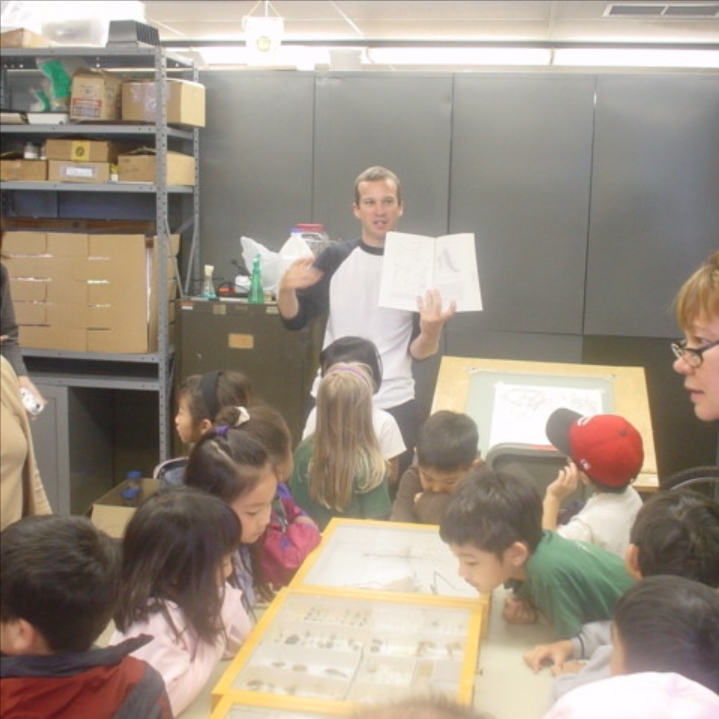
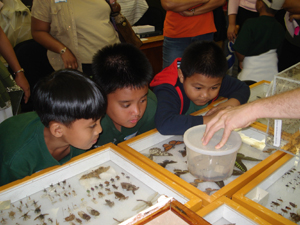
Occasionally, as time permits, some of our staff may volunteer to offer short tours of the museum to small and well-supervised school groups of no more than 20 children at a time. Because this is an active research museum, the activities and information we can offer are usually most appropriate for well-behaved children in and above the 2nd grade (especially Middle and High school students). There are also safety concerns which require a high ratio of adults to children, to make sure the visit is safe, enjoyable and educational. Unfortunately, we cannot accommodate drop ins or tours for fewer than five individuals! Because the Museum staff consists of researchers, rather than educators,
tours are given on a volunteer basis. We receive no funding to
conduct these tours. 
  |
|
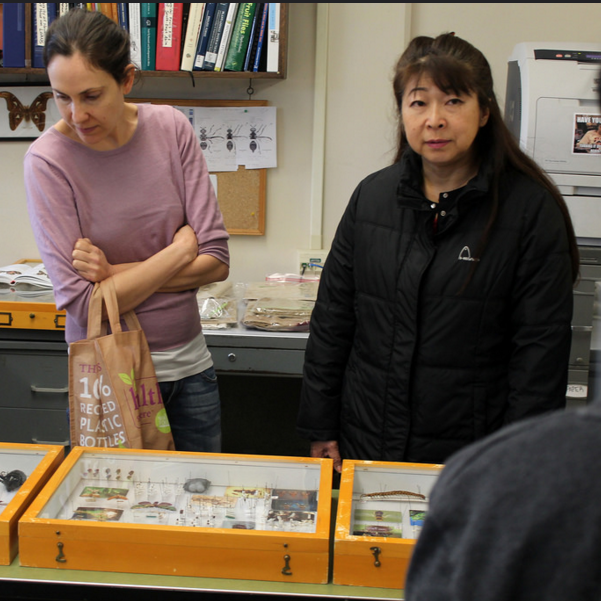
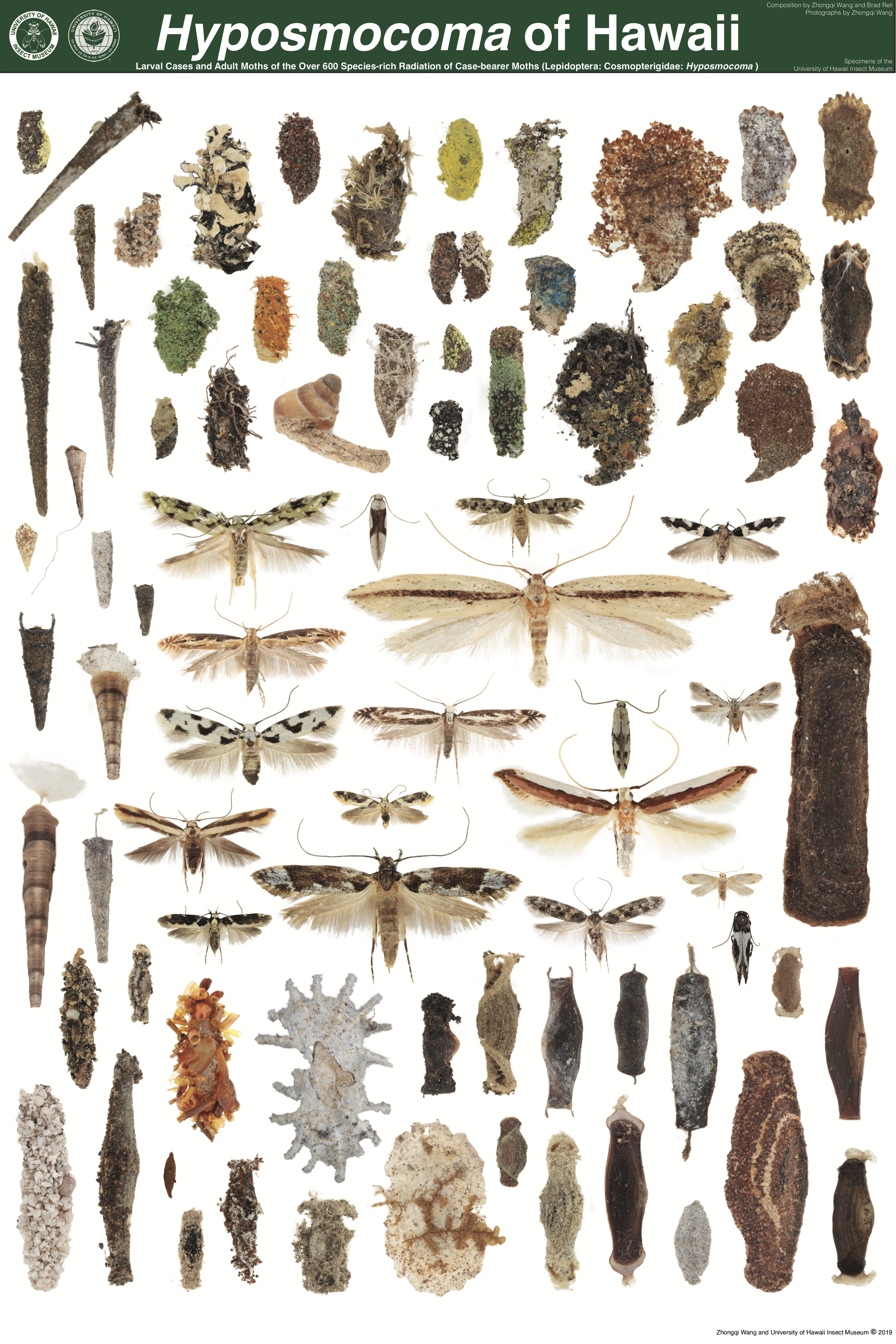
The University of Hawaii Insect Museum is a research museum with about quarter of a million insect specimens. We can introduce students to some of the incredible biodiversity that insects represent. While we do not offer specific lesson plans, or activities for all age groups, certain researchers may provide entertaining explanations of their research, and occasionally, live insect demonstrations (also including such non-insect arthropods as spiders and centipedes when available). Depending on age of participants, tours usually last about 30-45 minutes.
Because the Museum is the site of active scientific research, there are many potentially fragile items in the Museum, including the insect specimens themselves. For this safety reason we request a chaperone to child ratio of at least 1 parent to 5 children, and that parents actively assist us in keeping the children safe and focused.
We ask that all parents sign a photograph permission waiver form. This allows the UH Insect Museum to use pictures taken during your tour for outreach that will benefit visitors to our website. We will not use a child’s name and most pictures will be in a group setting. They will help future prospective visitors, both parents and children, understand what to expect on a tour. A waiver form will be sent to you before your visit and a copy signed by all parents or guardians must accompany your group.
Waiver Form
For more information, or to arrange a tour of the museum please contact Kyhl Austin (kaaustin@hawaii.edu) or Spencer Pote (slpote@hawaii.edu).
Director: Daniel Rubinoff
Affiliated Graduate Students and Post-Docs: Bradley Reil,
Mike San-Jose,
Camiel Doorenweerd,
Jared Bernard,
Sandra Schachat,
Kyhl Austin,
Spencer Pote
Collections Manager: Camiel Doorenweerd
Associate Faculty: Mark Wright, Ken Kaneshiro,
Leyla Kaufman, Donald Drake,
Paul Krushelnycky, Curtis Daehler,
Alison Sherwood, Gernot Presting
Affiliated Researchers: Luc Leblanc, Brenden Holland, Gordon Bennett
 University of Hawaii Insect Museum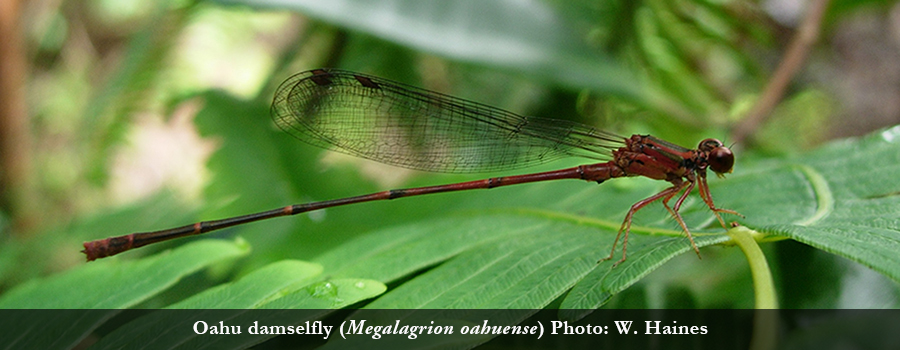
.jpg)